The social pressure of building your voice online
You know you should be more visible online. You have valuable insights to share. Your experience matters. But every time you open LinkedIn to post something, you freeze.
What if people judge me? What if it’s not good enough? What if I sound arrogant? What if no one engages?
So you close the app. You tell yourself you’ll post “when you have something really worth saying.” Meanwhile, you watch others (sometimes people with half your experience) share their thoughts confidently, building their profiles while you stay silent.
Sound familiar?
The new social pressure
 There’s a unique pressure that professionals (women in particular) face when it comes to building visibility online. It’s not just about business metrics or follower counts. It’s about something deeper: the fear of being seen as “too much” or “not enough.”
We scroll through LinkedIn and see perfectly polished thought leaders. Their insights seem profound. Their confidence appears unshakeable. Their engagement is impressive. We compare our messy, half-formed thoughts to their seemingly effortless brilliance and think: “I’m not ready yet.”
But what I think is really happening: We’re letting social media amplify the very patterns that already keep us small.
The same perfectionism that stops you from speaking up in meetings, is now stopping you from posting on LinkedIn.
The same fear of judgment that keeps you silent when you disagree? It’s now preventing you from sharing your perspective online.
The same tendency to downplay your expertise? It’s now making you think your insights aren’t “good enough” to share.
The dark side: performing instead of sharing
Social media has a dark side (that’s particularly insidious for women trying to find and use their voice).
We feel pressure to post only our most polished thoughts, our biggest wins, our most impressive moments. We curate a highlight reel that proves we’re worthy of attention, worthy of being heard, worthy of taking up space.
Then we obsessively check for validation. Every like becomes a small dopamine hit that temporarily soothes our anxiety about whether we’re “doing it right.” Every comment feels like external proof that maybe, just maybe, we do have something valuable to say.
We start measuring our worth by engagement metrics.
And when we see other professionals (especially those who seem more confident, more articulate, more successful) we fall into the comparison trap. We look at their “perfect” profiles and content and feel like we’re falling behind. We’re not enough. We don’t have what it takes.
I’ve come to learn, especially recently, that most of what you see online is curated.
The seemingly effortless thought leadership you admire was probably rewritten five times, (if not generated by AI).
That confident voice? They might have stared at the “publish” button for ten minutes before pressing it.
Those perfectly articulated insights? They came from the same messy thinking process you’re experiencing right now.
The reality (the moments of self-doubt, the imposter syndrome, the fear that they’re bothering people with their posts, the days they feel like giving up) rarely makes it into their feed.
The cost of staying silent
Here’s what many professionals don’t realize (or if they do, they avoid facing): Your silence online has a cost.
- When you don’t share your insights, someone with less experience but more confidence fills that space.
- When you don’t contribute to important conversations, the narrative gets shaped without your perspective.
- When you don’t build your visibility, opportunities go to people who are simply more visible – not more qualified.
Your voice matters. Your experience matters. Your perspective matters.
But if you never let people see it, how will they know?
Other-Esteem vs. Self-Esteem: The Core Issue
This is where we need to understand something fundamental: the difference between “other-esteem” and “self-esteem.”
Other-esteem is when we give others the power to determine our worth. We live for their approval. We need their likes, their validation, their recognition to feel like we matter. Without external affirmation, we don’t esteem ourselves. We let others do that for us.
This is the trap social media sets perfectly. It’s designed to keep us hooked on external validation, checking constantly for proof that we’re valuable.
But there’s another way: True Self-Esteem.
This is what we call unconditional self-worth. It’s where you choose to see yourself as a human being full of worth and value, here to contribute your unique perspective to the world. Your worth isn’t conditional on how many likes you get, how many followers you have, or whether people agree with you.
As Brené Brown puts it: Your worthiness for love and belonging is your birthright. Take it off the table.
When your self-worth is off the table (when it’s not up for negotiation based on social media metrics) something shifts. You can focus on adding value, sharing authentically, and contributing to conversations without your entire sense of self hanging in the balance.
You stop taking things so personally. You become more open to genuine dialogue. You share more courageously because your worth isn’t dependent on the response.
This distinction changes everything.
Your voice doesn’t need polish. It needs truth
One of the biggest myths holding us back online is this: “I need to have it all figured out before I can share.”
But thought leadership isn’t about having all the answers. It’s about being willing to:
- Share what you’re learning
- Ask powerful questions
- Offer your perspective, even when it’s still forming
- Admit what you don’t know
- Challenge conventional thinking
- Tell the truth about your experience
LinkedIn isn’t a performance stage. It’s a conversation space, or at least we wish it to be.
You don’t need to sound like a polished keynote speaker. You need to sound like yourself: someone with valuable experience and perspective worth sharing.
The posts that actually resonate? They’re often the ones that feel most vulnerable to publish. There the ones where you share a struggle, admit a mistake, question conventional wisdom, or simply tell the truth about what you’re experiencing.
Navigating social media with intention
So how do we use social media to build our voice and visibility without falling into its traps? Here are some principles:
 Remember why you’re here
You’re not on LinkedIn to collect likes. You’re there to:
- Share your expertise and perspective
- Connect with people who resonate with your ideas
- Contribute to important conversations in your field
- Build visibility for the work that matters to you
- Create opportunities aligned with your values
When you’re clear on your “why,” it becomes easier to post with purpose rather than for validation.
Check your motivation before posting
Before you hit “publish,” ask yourself:
- Am I sharing this to add value or to get validation?
- Am I being authentic or performing what I think people want to see?
- Would I share this even if I got zero engagement?
This isn’t about never wanting engagement- of course you do! It’s about ensuring your primary motivation is contribution, not approval-seeking.
Set boundaries with the platform
Social media platforms are designed to be addictive. They want you checking constantly. But you can take your power back:
- Decide in advance when you’ll post and engage (e.g., 3x per week)
- Set time limits for scrolling
- Turn off notifications that trigger compulsive checking
- Remember: You own the tool. Don’t let it own you.
When you catch yourself obsessively checking for likes or comparing yourself to others, that’s your signal that you’ve given your power away.
Focus on connection, not perfection
The goal isn’t to have the most polished post. The goal is to:
- Connect with people who need to hear your message
- Start conversations that matter
- Share insights that help others
Perfection is impossible, anyway. Let’s aim for being authentic, as that creates connection.
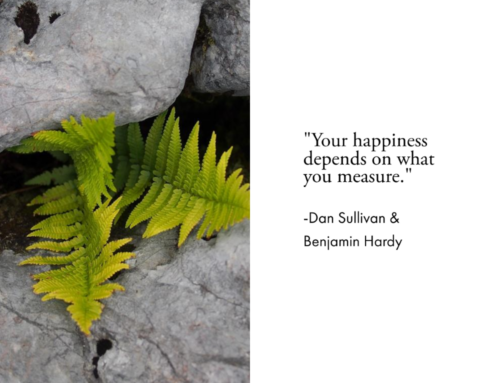
Measure what actually matters
Forget vanity metrics. What actually matters?
- Are you having meaningful conversations?
- Are you attracting opportunities aligned with your goals?
- Are you feeling more confident in your voice?
- Are you contributing to conversations that matter to you?
- Are you connecting with people you want in your network?
These are the metrics that indicate you’re using the platform well. Not likes and follower counts.
Be brave enough to be seen
Building your voice online requires courage. It requires the same courage you need to speak up in meetings, set boundaries, or have difficult conversations.
It’s the courage to:
- Share before you feel “ready”
- Risk being judged or misunderstood
- Take up space with your ideas
- Be visible even when it’s uncomfortable
- Trust that your perspective has value
And guess what: You will never feel fully ready. You will never have it all figured out. And that’s exactly when you need to start.
The world doesn’t need more perfect thought leaders. It needs more real and courageous ones.
It needs professionals who are willing to share their messy, evolving thoughts. Who ask questions rather than pretending to have all the answers. Who tell the truth about their experiences. Who speak up even when their voice shakes.
That person is you.
Your next step
If you’ve been waiting to build your profile or personal brand online, consider this your permission slip to start. I give you permission to start imperfectly, authentically, and courageously.
Your voice doesn’t need to be polished. It needs to be heard.
Share one insight this week. Just one. Not your most profound thought. Not your most impressive achievement. Just something true and useful from your experience. Share and tag me or send me the link, so I can cheer you on!
And remember: Your worth isn’t on the table. You already matter. You’re simply choosing to let people see what you have to offer.
The world is waiting for your voice.
What’s one insight you’ve been holding back from sharing? I’d love to know -publish it, and tag me or tell me about it. You’ll find me on LinkedIn here, also being brave and sharing my thoughts.
With courage,
Telana
P.S. If you found this helpful, I share courage hacks for having difficult conversations and owning your voice on Instagram too. Follow along for practical tools to help you speak up, even when it’s hard.
PPS. I also offer Clarity Coaching, to help you work out how to clearly communicate your personal brand.